For ninety-nine years
Our story
François · Jacques · Delphine
Three generations in the same cave. A gesture passed on through apprenticeship, not instruction. A Maison that holds because those who carry it do not seek to reinvent it.
For ninety-nine years
François · Jacques · Delphine
Three generations in the same cave. A gesture passed on through apprenticeship, not instruction. A Maison that holds because those who carry it do not seek to reinvent it.
Chapter I · The founder
A handshake, a three-line specification, thirteen shepherds of the causse. The Maison begins there.
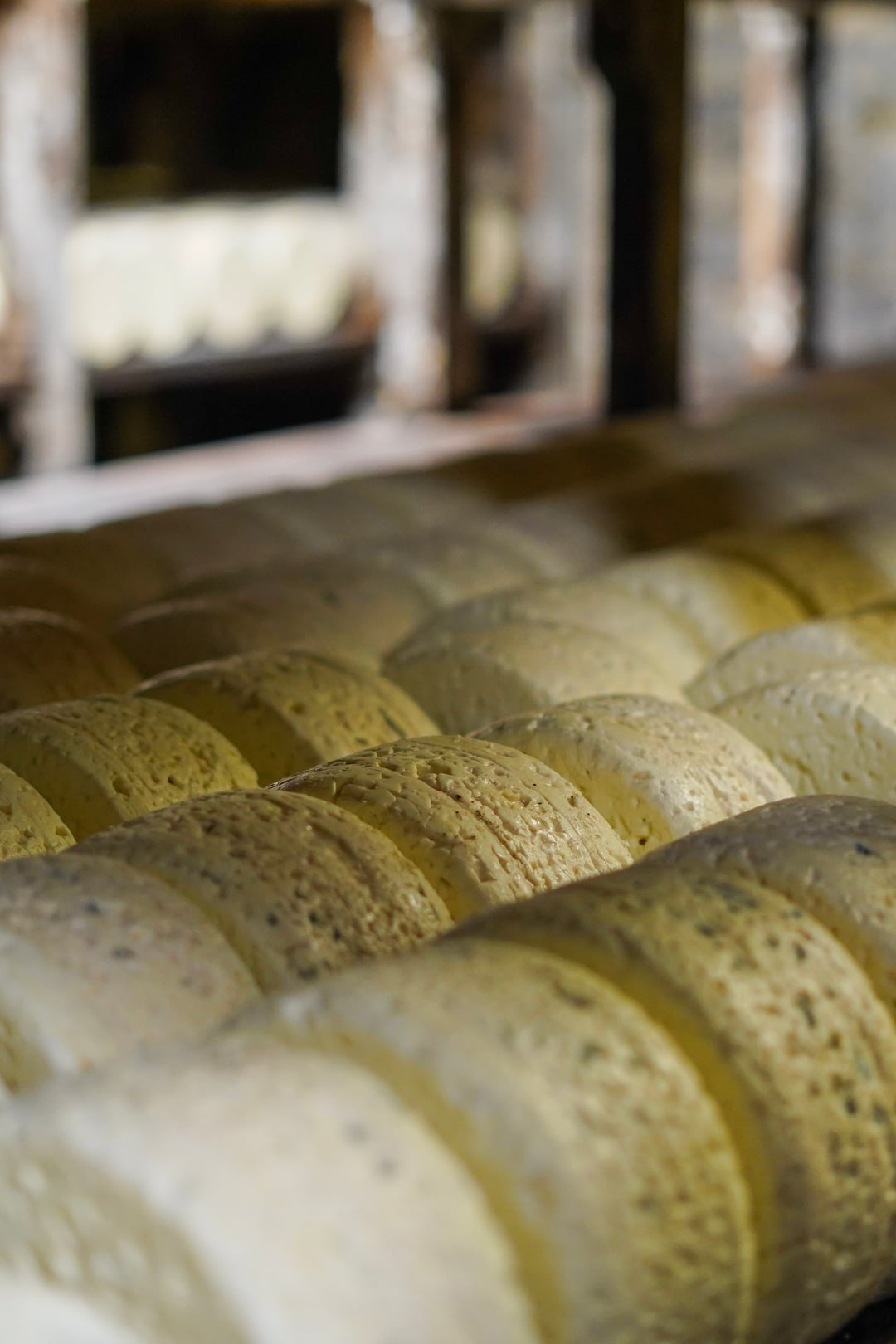
In 1927, François Carles opened an ageing workshop in Roquefort-sur-Soulzon. The village already had several. His rule came down to three points: raw sheep's milk, wooden travet, ageing in the caves of Combalou. The rest he would decide as he worked.
Thirteen shepherds of the causse agreed to supply him. A verbal agreement, a weekly round, a price indexed to the quality of the milk. Ninety-nine years later, the same farms still deliver. In several of them, the grandchildren of the first signatories now milk in the morning.
The era pushed for mechanisation. Several peers installed heated vats and standardised their blues. François did not follow. It was not a matter of principle. He had compared the two, in the cave, at tasting. The hand gives something the machine cannot reach.
The caves of Combalou remain his sole address. The rock splits into fleurines, the fissures that ventilate the galleries at all times. The temperature holds on its own, so does the humidity. The wood of the travet completes the whole. Its board keeps a flora that every cheese enriches as it passes.
François aged cheese for thirty years before passing the workshop to his son. The framework he set still holds.
Chapter II · The continuator
A son who grew up in the cave. He took over the workshop without changing any of the gestures, the woods, or the agreements. He maintained.
Jacques Carles took over the workshop in 1957. He grew up in it. As a child, he spent his afternoons watching his father turn the cheeses, tending the loaf of bread on which the Penicillium grew, talking with the village shepherds. He did not have to learn the craft from courses. He watched, he imitated, he ended up doing it alone.
Nothing changed. The travets stayed wooden. The caves of Combalou remained the sole place of ageing. The Penicillium continued to be cultivated on bread, in the Maison's kitchen. The thirteen founding farms still delivered. Jacques did not question modernising.
Around him, the era moved. The AOP Roquefort took shape in the 1960s. Large industrial groups arrived, bought up the smaller affineurs, rationalised production. Several workshops his father had known disappeared. Carles remained independent. It was a choice that cost in growth, and one that was not debated in the family.
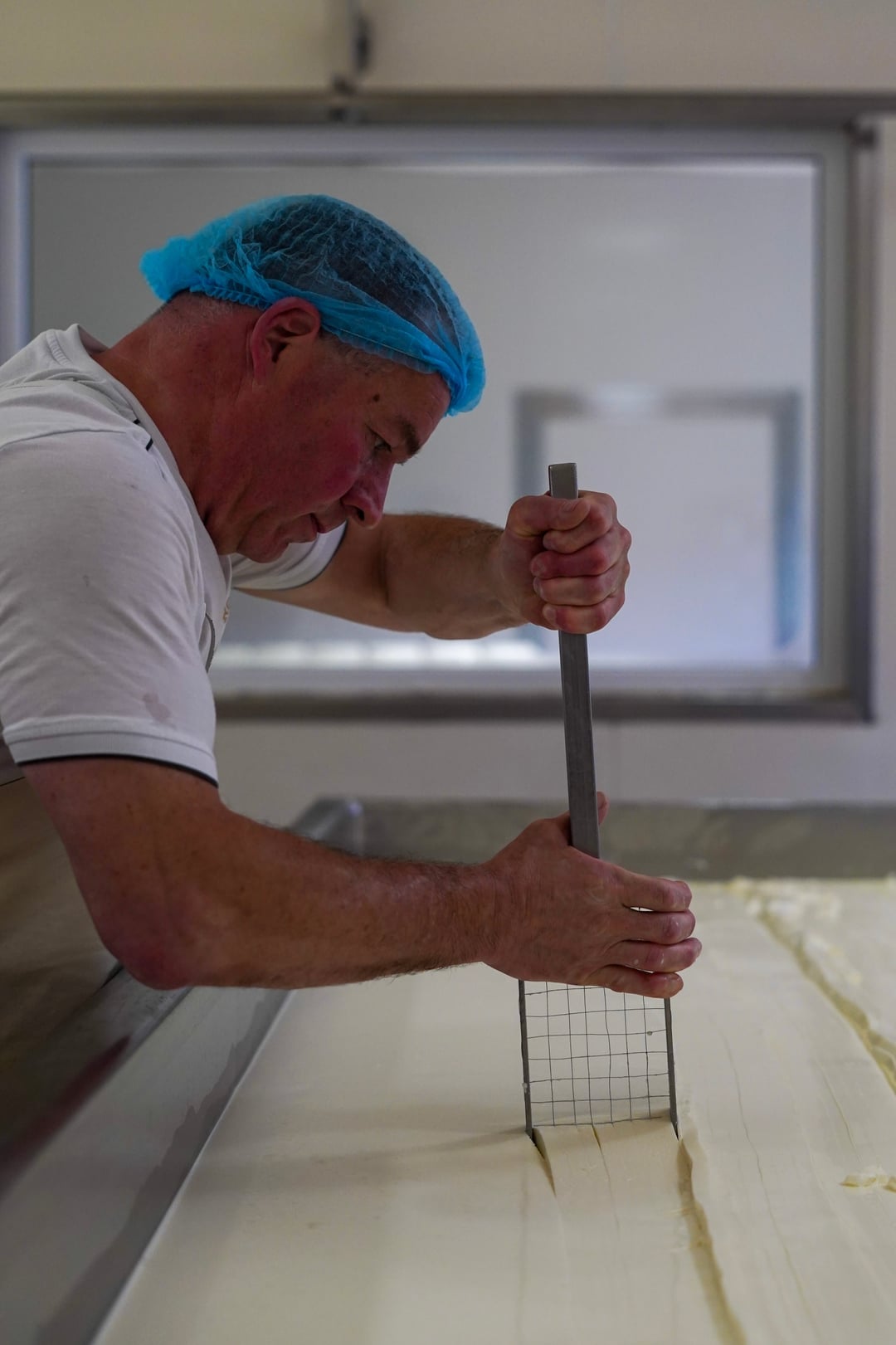
We will never produce more
than what we know how to do by hand.
Under his direction, Carles consolidated its place among the rare workshops still ageing on wood. They were already few in 1957. By the end of his tenure, they were a handful. Today, the Maison is one of the last to carry on the traditional travet.
Jacques prepared the succession without making it known. His daughter Delphine also grew up in the workshop. She learned as he had learned: by watching, repeating, ending up doing it alone.
Chapter III · The third generation
Third generation. Director and master artisan at once. Both titles carried through the same gestures.
Director · Master Artisan
— Master Artisan
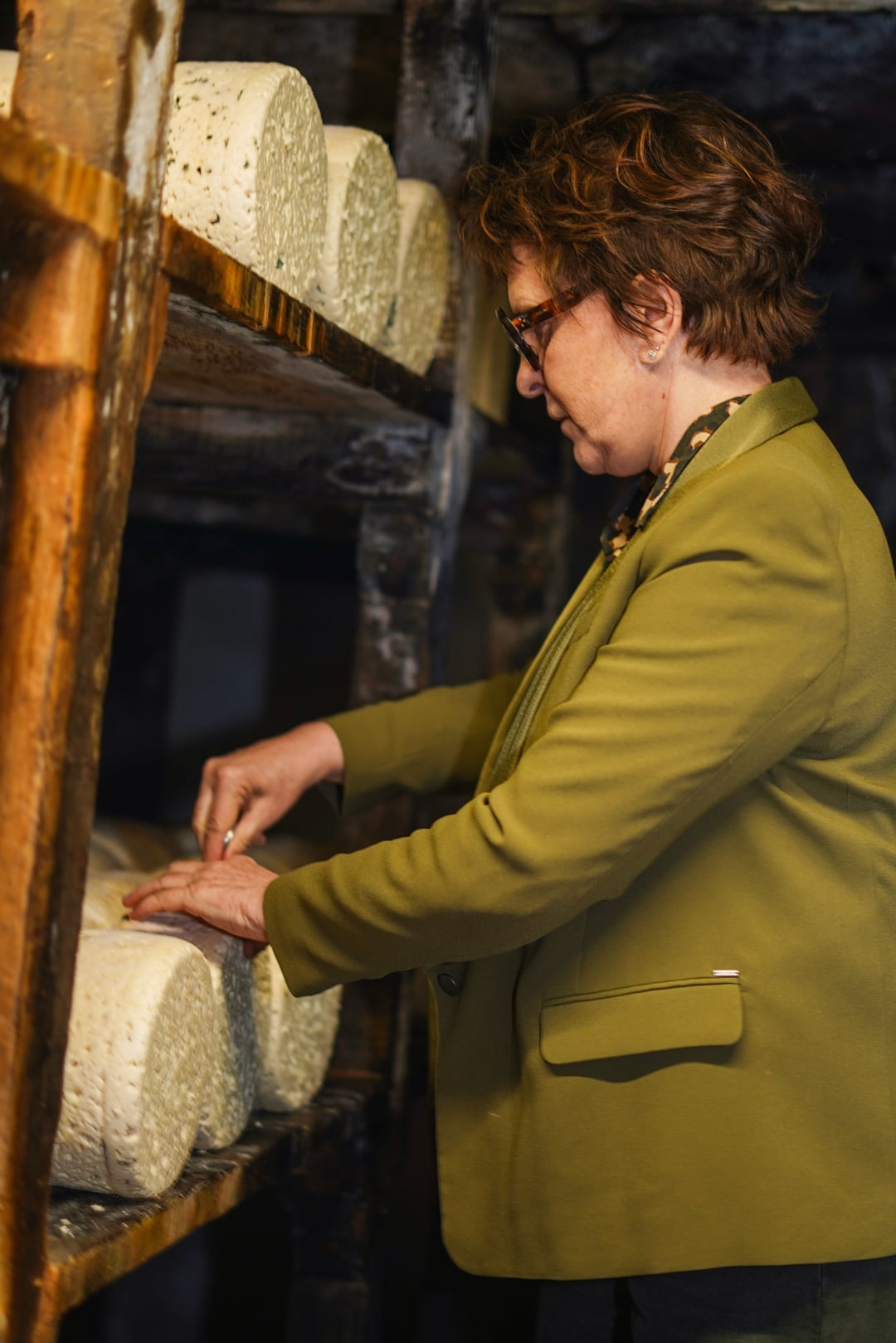
Delphine Carles took over the Maison in 1997. On the workshop door, two titles beneath her name: Director and Master Artisan. She does both in the same day. Orders, shepherds, teams, and accounts in the morning. Turning, salting, and moving cheeses on the boards in the afternoon. The fleurines, she glances at them in passing, on her way down through the galleries.
She grew up between the travets, as her father did before her. Learning came through repetition. You watch, you imitate, you end up doing it alone. This kind of knowledge is not found in books. The right weight of a cheese in the hands. The sound of a curd that cuts well. The colour of a blue about to ripen. It is passed in apprenticeship, not otherwise.
Under her direction, the Maison does not change. The thirteen partner farms still deliver. In some, the third generation of shepherds has already taken over their father's vats. Bread still cultivates the Penicillium. The travets are wooden. Nothing in the workshop suggests that thirty years have passed since Jacques, or sixty since François.
She has not broken with what came before. She has worked on recognition. Starred chefs and several Meilleurs Ouvriers de France now compose their cheese platters with the Maison's cheeses. Two ranges were born under her tenure. Convoitise, for tables that seek the signature of wood. Élégance, to open the Maison to a broader public, without giving up what defines it.
She speaks little of herself. When asked what she has changed, she gives the same answer. Nothing more than what the gesture required.
I did not invent the gesture.
I extend it.
Chapter IV · An interlude
Before the travet, before the caves, there is the milk. It arrives each morning from thirteen farms of the causse, delivered by shepherds whose first names the Maison knows.
Raw sheep's milk, delivered twice a day in season. No blending, no buffer storage: the morning round goes into the vat in the afternoon. It keeps the memory of the grass, the flower, the season.
Little written, plenty of consistency. Pickup at fixed hours, a price that follows quality, tests carried out on site. When a flock changes hands, the agreement follows, without renegotiation. That is rare. It is the signature of a short supply chain, in the literal sense of the term.
The shepherds know their milk will go onto travets, not into an industrial vat. They also know their name stays attached to what leaves the cave. It changes the way they tend to their sheep. It is not a marketing argument — it is a fact on the ground.
Continue reading
History tells where the Maison comes from. The following pages tell how it holds.